Project planning and consulting

At IPOA, you have access to high technical expertise and experienced specialists, who ensure that the steel structures for your project are optimal from the start. We help you with the entire process – from idea and drawing to fully assembled structure.

Structural engineering consulting

Our engineers and consultants help you find the right solution based on your project's specifications and requirements. We assist with technical assessments, design principles and ensure that the construction is both efficient, robust and sustainable.

  • Technical consulting and concept development

  • Early-phase assessments and material selection

  • Project-specific solutions and recommendations

Dimensioning and calculation

Correct sizing is essential for the construction to be safe, cost-effective and have a long service life. We perform accurate calculations according to current standards and regulations, so that the steel structures can withstand all loads.

  • Static and dynamic analyses

  • Load calculations and foundation

  • Capacity and sizing reports

BIM modeling and 3D design

We use advanced BIM (Building Information Modeling) technology and 3D design, which ensures efficient planning and precise results. With digital models, we ensure good coordination, visualization and quality throughout the project.

  • 3D drawings and visualizations

  • BIM interaction with other disciplines

  • Collision control and digital project management

Construction optimization

Our experts optimize steel structures with regard to sustainability, material use and cost-effectiveness. The goal is always to find solutions that reduce material consumption, time consumption and environmental impact – without compromising quality or safety.

  • Optimization of material consumption

  • Efficient production and assembly methods

  • Cost-saving measures and sustainable solutions

Frequently asked questions about steel structure design

What is steel structure design?

Steel structural engineering is the planning, dimensioning and modelling of load-bearing steel structures prior to production and construction. The process includes the selection of the design principle, the calculation of loads and the preparation of technical drawings and 3D models. The aim is to ensure that the construction is safe, efficient and in accordance with applicable requirements and standards.

Structural engineering consulting involves developing and evaluating solutions for load-bearing structures based on the project's requirements. This includes the selection of materials, the assessment of load-bearing systems, and the recommendation of technical solutions. Consulting is often done early in the project to ensure the right decisions are made before the project moves forward.

Correct dimensioning is essential for a steel structure to withstand all loads throughout its service life. This includes self-weight, payload, snow, wind and any dynamic impacts. Correct dimensioning provides both high safety, optimal material use and a more cost-effective solution.

BIM (Building Information Modeling) is a method for developing digital 3D models of buildings and structures with associated technical information. BIM is used for coordination between disciplines, visualization of solutions and quality assurance of the project. The method makes it easier to detect errors early and improves collaboration in complex construction projects.

2D drawings show the construction in plan, section and facade, while 3D design provides a full digital model of the entire construction. 3D models provide a better overview, easier coordination and reduce the risk of errors. In modern construction projects, 3D models are often used as the basis for both production and assembly.

Designing helps to lower costs by optimizing the design before production begins. This makes it possible to reduce material consumption, simplify production and avoid changes along the way. Good choices early in the project often result in lower total costs and more efficient execution.

Structural optimization is the process of improving a steel structure to achieve the best possible balance between strength, weight, cost and sustainability. This may involve selecting more efficient profiles, reducing material usage and adapting production and assembly methods.

Design should start early, preferably in the concept and planning stages. Early involvement makes it possible to make the right choices before solutions are locked in, and provides better control over costs, progress and quality throughout the project.

Quality in the design phase is ensured through checking calculations, models and drawings according to current standards. This includes verification of load assumptions, dimensioning and coordination between disciplines. Digital tools such as BIM contribute to better quality and fewer errors.

Design forms the basis for both production and assembly of steel structures. Drawings and models are used directly in the factory and on the construction site. Good interaction between design, production and assembly improves the flow of the project and reduces the risk of errors and delays.

Projects

Dock Hall Larsnes

IPOA delivered the steel structures for one of Norway's most modern and efficient dry docks. With a covered hall measuring 140 x 40 meters and a height of 31 meters above the quay level, the facility enables lightning-fast docking – with an emptying time of 1.25 hours and a filling time of 0.45 hours.

View project

OBS Building Mørkved

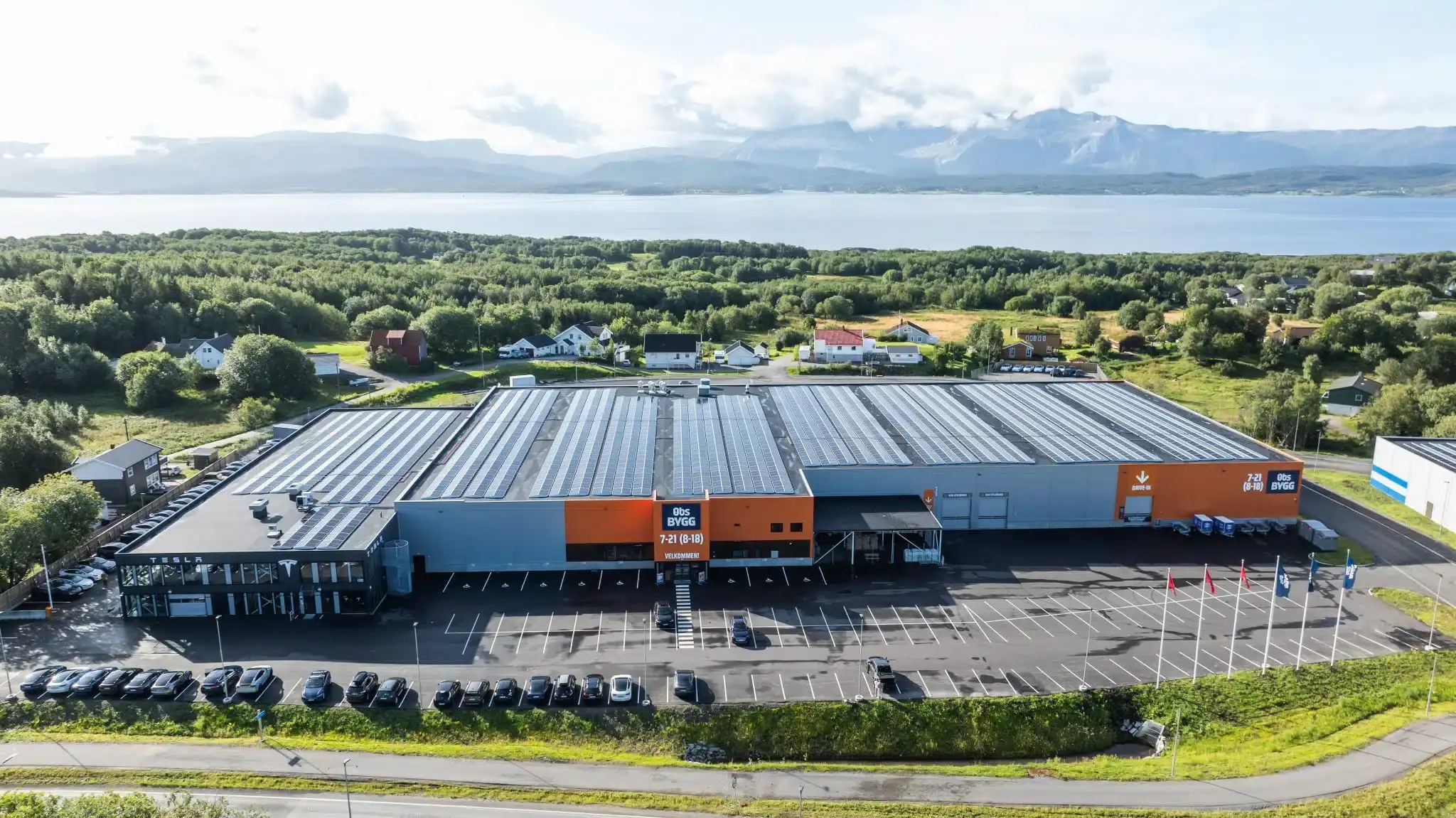
IPOA has delivered the steel structures for the new Obs BYGG in Bodø – a future-oriented building materials warehouse of a total of 8,000 m², with both a store, drive-in and plant market. With smart logistics, sheltered goods handling and high user-friendliness, the facility raises the standard for building materials retail in the north.

View project

OBS Building Mjøndalen

In Mjøndalen, Coop Eiendom, in collaboration with Skanska Norge, has built a new Obs BYGG warehouse with a lumber department and drive-in solution. The building has a gross area of 7,500 m², in addition to an outdoor area of 11,000 m².

View project

Toyota Material Handling

In collaboration with Veidekke Logistikkbygg, IPOA has delivered the steel structures for the new logistics and service center for Toyota Material Handling at Gardermoen Industrial Park. The building was developed by the Fabritius Group and includes workshop, warehouse and office space spread over a total of 9,080 m².

View project